
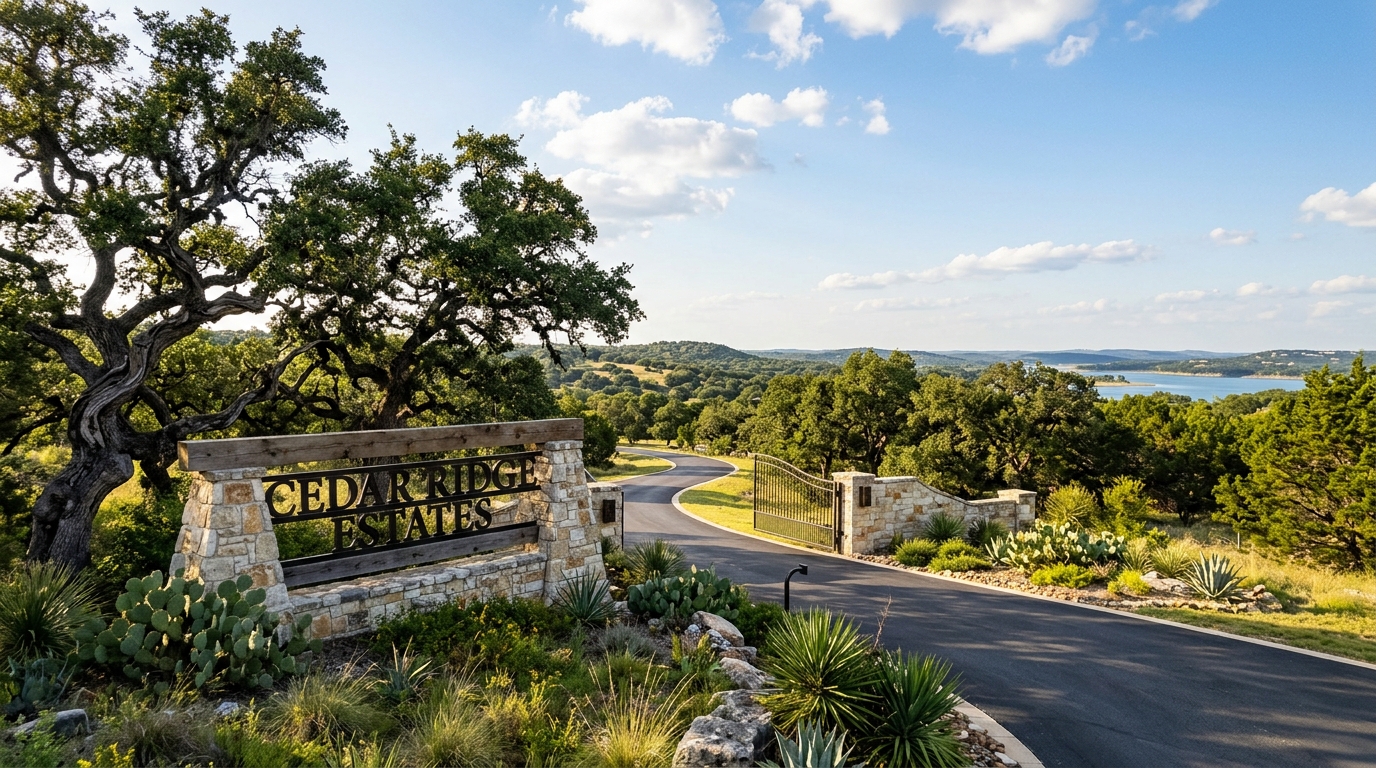
How much does an HOA cost in the Hill Country?
As of April 2026, HOA dues in the Hill Country typically range from $200 a year for basic road maintenance to over $2,500 a year for resort-style communities with pools and fitness centers. According to recent Comal County property records, neighborhoods like Vintage Oaks or Cascada at Canyon Lake sit on the higher end because of the massive amenity packages, while older units around the lake might just have a voluntary fee for boat ramp access.
Look, I've spent twenty years with dirt under my fingernails building over 400 homes in this area, and if there's one thing I've learned, it's that people have a love-hate relationship with HOAs. You moved out here to Spring Branch or Bulverde for the space and the freedom, right? But then you realize that without some rules, your neighbor might decide to start a literal junkyard right next to your half-million-dollar investment. So, we deal with the 'Homeowners Association'—or as some of my clients call them, the 'Hang Out and Arbitrate' club. Honestly, they aren't all bad, but you have to know what you're walking into before you sign those closing papers at the title company.
First off, let’s talk about the money. It’s not just the annual dues. You’ve got transfer fees, resale certificate fees, and sometimes 'capital contribution' fees that can whack you for a few thousand bucks the day you buy the house. And don't even get me started on the fines. If you’re looking at property search sites, they usually show a monthly or yearly fee, but that’s just the tip of the iceberg. Always ask for the Resale Certificate—it's a document required by the Texas Property Code that tells you exactly what the current owner owes and if there are any active violations on the property. If the guy selling the house hasn't mowed his grass in three months, that fine might become your problem if you don't catch it early.
Can the HOA stop me from building what I want?
Yes, in most cases, the Architectural Control Committee (ACC) has the final say on your home’s design, exterior materials, and even the type of trees you plant. In the Texas Hill Country, many HOAs require at least 75-100% masonry (stone or stucco) and strictly forbid certain types of metal siding or specific roof colors to maintain a cohesive look across the neighborhood.
This is where things get sticky, especially if you're planning to build a custom home. I see it all the time at Parker Design & Consulting. A client buys a gorgeous lot in a spot like Singing Hills or Copper Canyon, thinking they can build a modern farmhouse with black metal siding. Then the ACC steps in and says, 'Nope, needs more limestone.' It’s frustrating as heck. That’s why we use 'The Parker Method'—we look at the deed restrictions before we even start the architectural design. It saves you months of back-and-forth and a lot of whiskey-induced headaches. If you're working with local builders like Perry Homes or Ashton Woods, they've already cleared these hurdles, but if you're going custom? You better have a pro in your corner who knows how to talk to these committees.
And let’s talk about RVs and boats. We live near Canyon Lake. Everyone has a boat. But a lot of these neighborhoods—especially the newer ones along the HWY 281 Corridor—will not let you park that boat in your driveway. Not even for a night. You'll need a garage that's deep enough (which most standard builders don't do) or you'll be paying for off-site storage. I’ve seen people get fined $50 a day for having a trailer out. It’s brutal. Before you buy in Canyon Lake, check the 'CC&Rs'—Covenants, Conditions, and Restrictions. It's the 'bible' of the neighborhood, and it'll tell you if your hobbies are going to cost you a fortune in fines.
Quick tangent: If you're looking at commercial real estate or land along FM 3009, HOAs usually aren't an issue, but you'll have city zoning and ETJ (Extraterritorial Jurisdiction) rules to fight instead. It's always something, isn't it? Anyway—back to the residential stuff.
What are my rights as a homeowner in a Texas HOA?
Under Texas Property Code Chapter 209, also known as the Texas Residential Property Owners Protection Act, homeowners have specific protections, including the right to a hearing before the board before being fined and the right to see the association’s books and records. Texas law also protects your right to display the US flag, certain religious items, and even install solar panels, regardless of what the HOA bylaws say.
Look, the law is actually on your side more than you think. A few years back, the Texas Legislature reined in some of the 'rogue' HOAs that were foreclosing on people for a $200 late fee. Now, they have to follow a very specific process. But that doesn't mean you want to spend your weekends in a legal battle. My advice? When you're touring homes in Bulverde or New Braunfels, look at the common areas. Are the parks clean? Is the pool maintained? If the HOA is doing its job, the neighborhood stays nice and your property value goes up. That’s the trade-off. You give up a little freedom to make sure your neighbor doesn't paint his house neon purple and park a rusted-out school bus on the lawn.
I walked a lot on Purgatory Road last Tuesday that was technically 'unrestricted'—no HOA. It was beautiful, but the guy across the street had three shipping containers stacked up and was running a makeshift welding shop at 10 PM. That’s the 'freedom' you get without an HOA. Some people love it. Others? Not so much. It just depends on what kind of life you want to live out here.
If you're confused about a specific neighborhood—say you're looking at Copper Canyon or The Wilder—just give me a shout. We've lived and worked in this dirt for decades. Tiffany and I know which boards are easy to work with and which ones are a total nightmare. We've got 63+ five-star reviews from folks who we helped navigate this exact stuff. There's no point in guessing when you're dropping six or seven figures on a home.
Anyway, that’s my two cents on the matter. Don’t let the HOA scare you off, but don’t go in blind either. Read the paperwork. Or better yet, hire someone who actually knows how to read it for you. Catch you later.
Data sourced from the Texas Real Estate Research Center and Comal County public records. Always verify current numbers and specific deed restrictions with a local agent before purchasing.
Frequently Asked Questions About Hill Country HOAs
How do I find out the HOA rules before I buy?
You can request the 'Covenants, Conditions, and Restrictions' (CC&Rs) from your real estate agent or find them in the public land records of the county (Comal, Hays, or Guadalupe). Most established neighborhoods also have a public website or a portal on sites like TownSq where they post their bylaws and architectural guidelines.
Can a Texas HOA tell me I can’t have a xeriscaped yard?
No. Texas Senate Bill 198 prevents HOAs from banning drought-resistant landscaping or water-conserving turf. However, they can still require you to submit a plan for approval to ensure it doesn't look like a weed patch. In the Hill Country, where water is gold, xeriscaping is actually the smart move.
What happens if I don't pay my HOA dues in Texas?
In Texas, an HOA has the power to place a lien on your property for unpaid assessments. While the process is strictly regulated under Chapter 209 of the Property Code, they can eventually move toward foreclosure. Always stay current on your dues to avoid mounting legal fees and interest, which often end up costing more than the original debt.
Frequently Asked Questions
How much are HOA fees in the Hill Country?
As of 2026, fees typically range from $200/year for rural road maintenance to $2,500+/year for resort-style communities in areas like Spring Branch and Canyon Lake.
Can I park my RV in a Hill Country HOA?
Most modern subdivisions in Comal County prohibit RV or boat parking on driveways or streets. You generally need a garage or a screened area that meets specific ACC guidelines.
Are HOAs required in Texas?
No, but they are extremely common in master-planned communities. If you want no HOA, you'll need to look for 'unrestricted' land or older units, though these often lack amenities and road maintenance.
Leave a Comment